
 By Colin Brown
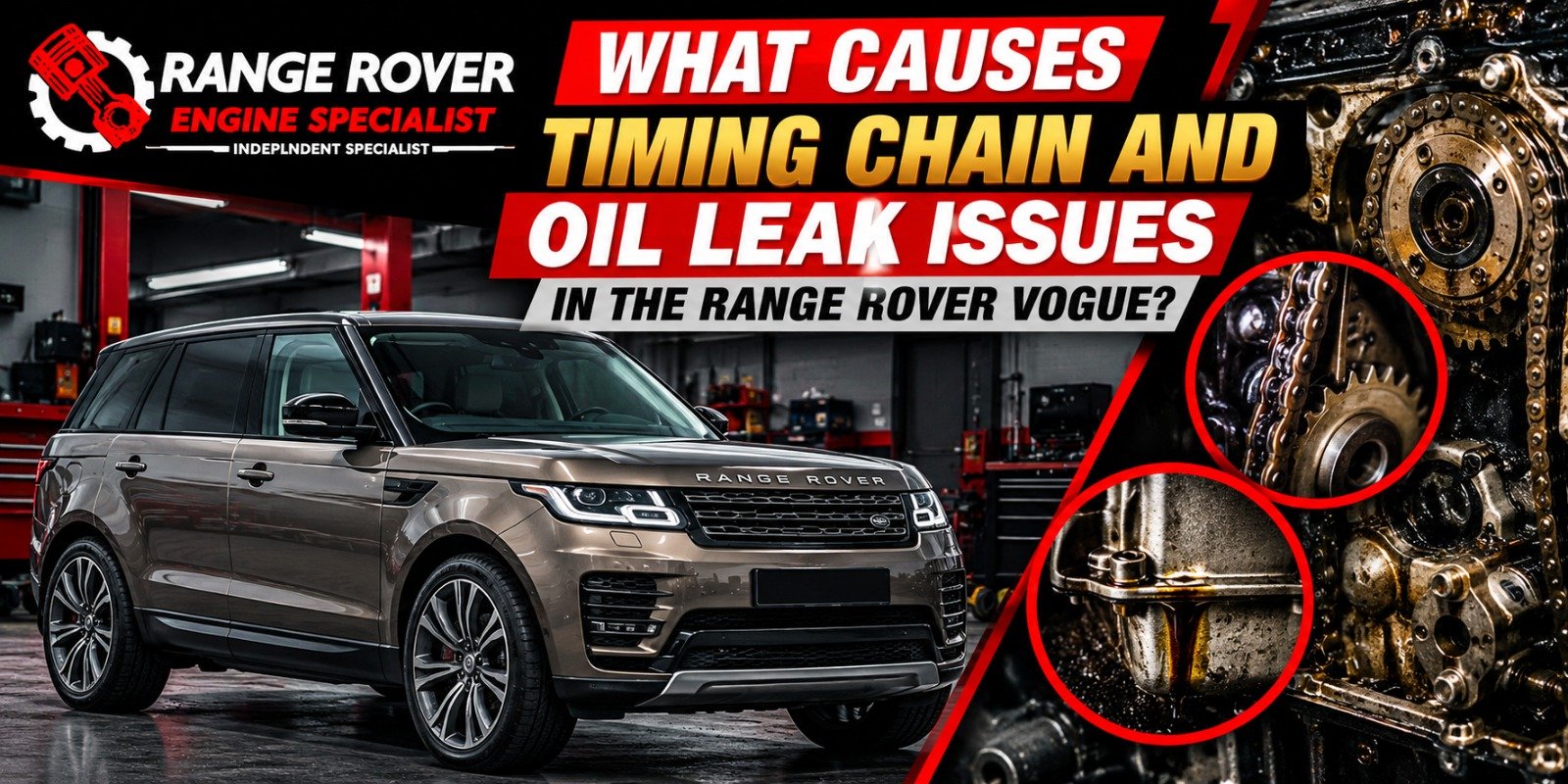
Timing chain wear and oil leaks are two of the most common problems on a high-mileage Range Rover Vogue Engine. They often appear together, because low oil pressure and poor lubrication speed up chain wear, while leaking seals and gaskets cause the oil to drop in the first place. Left alone, either fault can destroy the engine.
At Range Rover Engine Specialists in Grays, Essex, we supply and fit quality Range Rover engines for owners across the UK. This guide explains why these faults happen, which warning signs to watch for, which engine codes your car may carry and what engine replacement costs in the UK look like. We also cover logistics, so you know how quickly a replacement can reach you.
Why Timing Chains Wear on the Range Rover Vogue
The timing chain links the crankshaft to the camshafts, keeping valves and pistons in perfect sync. On the Range Rover Vogue engine, the chain runs on guides and tensioners that depend on a steady supply of clean oil. When oil is old, low or thin, the guides wear, the tensioner loses pressure and the chain stretches.
Stretch is gradual. At first the engine may only show a slight rattle on a cold start, which fades once oil pressure builds. Over time the timing drifts, causing rough running, reduced power and warning lights. If the chain jumps a tooth or snaps, the pistons can hit the valves, which usually means major internal damage.
Several factors speed up this wear. Long service intervals, short journeys that stop the engine fully warming up, cheap or wrong-grade oil and high mileage all play a part. Heavy loads, such as towing, add extra strain. Regular servicing with the correct oil is the best protection for the chain and the whole engine.
Common Causes of Oil Leaks
Oil leaks are another well-known concern on the Range Rover Vogue. The most common sources are rocker cover gaskets, oil filter housing seals, sump gaskets, crankshaft seals and oil cooler pipes. Rubber and plastic parts harden with heat and age, so seals lose their grip and start to weep.
Engines that run hot, particularly V8 and V6 units in a tight engine bay, put gaskets under constant stress. Overfilled crankcases and blocked breather systems can raise internal pressure, pushing oil past seals that would otherwise hold. Some engines also have plastic oil-system components that crack with age.
A small leak may seem harmless, but it matters. Oil dripping onto hot exhaust parts can smoke or smell, and oil on belts and hoses causes them to fail early. More importantly, a falling oil level starves the engine, which accelerates timing chain wear and bearing damage. Check the oil level regularly and look for drips under the car or dark, wet patches around the engine. Early repair is usually cheap, while neglect leads to costly damage.
How Oil Leaks and Timing Chain Problems Are Linked
These two faults feed each other. A leak lowers the oil level and pressure, so the chain tensioner and guides receive less lubrication. Poor lubrication speeds up chain wear. In turn, a worn chain can change valve timing, raise engine stress and heat, and make seals leak even more.
Sludge makes the cycle worse. Old oil and infrequent changes leave deposits that block the narrow oil passages feeding the tensioner and variable valve timing system. When those passages clog, the chain loses hydraulic support and begins to rattle.
This is why a technician will check both at the same time. Fixing a gasket without checking the chain can leave a hidden problem, while replacing a chain without fixing the leak can lead to a repeat failure. A full inspection covers oil pressure, chain stretch, tensioner condition and all leak points. Our technicians explain what they find in plain language, so you can choose between a repair, an engine rebuild or a full replacement based on the real condition of the engine.
Range Rover Engine Codes and Specifications
Knowing your engine code makes diagnosis and replacement quicker. The code is stamped on the block and listed in your vehicle paperwork. The table below shows the main Range Rover engines we work with. Figures are typical and vary by model year and tune.
| Engine Code | Engine | Fuel | Typical Power | Notes |
| 306DT | 3.0 TdV6 / SDV6 | Diesel | 245-292 hp | Twin-turbo V6, 2010 onwards |
| 368DT | 3.6 TdV8 | Diesel | 272 hp | Early Vogue, L322 |
| 448DT | 4.4 SDV8 | Diesel | 313-339 hp | Twin-turbo V8 |
| 508PN | 5.0 V8 Naturally Aspirated | Petrol | 375 hp | L322 and L405 |
| 508PS | 5.0 V8 Supercharged | Petrol | 510-575 hp | Autobiography and SVR |
| 204DTD | 2.0 Ingenium | Diesel | 163-240 hp | Velar and Evoque |
| AJ30 | 3.0 Ingenium Straight-Six | Petrol | 355-400 hp | Newer Range Rover |
Always confirm your code and VIN with our team before ordering. Fitting the wrong variant causes delays and extra cost.
Signs Your Engine Needs Attention
Catching problems early gives you more choices. Listen for a rattle or chain-like noise on a cold start, a ticking that grows louder under acceleration or a whining sound. These can point to chain or tensioner wear. Watch for warning lights, rough idling, reduced power or poor fuel economy.
For oil leaks, look for oil spots on your drive, a burning smell, blue-grey smoke or a low oil level between services. Dark, damp patches around the rocker covers or sump are another clue. If the oil pressure warning light flashes, stop safely and switch off, as driving on can cause serious damage.
Do not ignore these signs, even if the car still drives normally. A diagnostic scan with Land Rover-compatible equipment can read stored codes and reveal timing faults before they become failures. If the engine has suffered major damage, an engine replacement may be the more sensible route than repeated repairs. Our team can inspect the car, give honest advice and provide a clear written quote, so you only pay for work that is genuinely needed.
Reconditioned Engines vs Used Engines
When repair is no longer sensible, owners compare reconditioned JLR engines vs used engines. A used engine is taken from another vehicle, often with unknown history and mileage. It may run well at first, but internal wear is a gamble, and a failure after fitting means paying labour twice.
Reconditioned Engines are stripped, cleaned and inspected. Worn parts such as bearings, piston rings, seals, gaskets and timing components are replaced, and critical surfaces are machined where needed. Each unit is tested before sale, so the main risks are dealt with before it reaches you.
For timing chain and oil leak problems in particular, this matters. A reconditioned unit comes with a fresh chain, guides, tensioners and seals, so the faults that caused your original failure are addressed. A used engine may carry the same hidden wear. The result is better reliability, a stronger warranty and fewer return visits. For a vehicle you plan to keep, reconditioned is generally the better value, while a used unit may suit an older car on a tight budget.
Range Rover Engine for Sale and Replacement Costs
When you are ready to buy, the process should be simple and low-risk. At Range Rover Engine Specialists we keep a wide range of units, so a Range Rover Engine for sale is often ready for quick dispatch or workshop fitting. You can shop with us knowing every engine is tested and backed by after-sales support.
We are proud to offer No Upfront Charges and No Deposit Required. You can arrange your engine replacement without paying anything in advance, and you pay only once the work is complete and you are satisfied.
Engine replacement costs in the UK vary with the model and the work involved. As a rough guide, a reconditioned unit can range from around £2,000 for a four-cylinder diesel to £7,000 or more for supercharged V8 petrol units. Labour usually adds between £900 and £2,000. We recommend replacing worn supporting parts at the same time, which is cheaper than a second strip-down. We give a clear written quote before work starts. Figures are approximate, so contact us for an exact price.
Logistics: Delivery, Collection and Fitting
Good logistics keep your downtime short. Once your engine code is confirmed, we check stock, reserve the unit and plan the delivery or collection date. Engines held at our Grays base can often be prepared for same-day or next-day handling, while specialist units may need a few extra days to source.
If you want us to handle everything, our supply and fit services mean the engine is delivered to our workshop and installed by our technicians. Fitting a reconditioned Range Rover engine typically takes two to four working days, depending on the model. If you prefer your own garage, we can arrange secure, palletised UK-wide delivery. The engine is carefully packed and protected for transit, and delivery usually takes one to three working days.
Customers in Essex, London and nearby counties can also drop off or collect in person. We keep you updated at every stage, from stock confirmation and dispatch to workshop booking and handover. With clear scheduling and tracked shipping, the process from order to fitted engine usually takes about a week or less.
FAQs
1. What causes timing chain problems in a Range Rover Vogue?
Low or old oil, long service intervals and high mileage wear the guides and tensioners. This lets the chain stretch and rattle.
2. Can an oil leak damage the engine?
Yes. A falling oil level starves the engine and speeds up timing chain and bearing wear. Fix leaks early.
3. Do I need to pay a deposit?
No. Range Rover Engine Specialists offers no upfront charges and no deposit required. You pay once the work is complete.
4. Do you supply and fit Range Rover engines?
Yes. Our supply and fit services cover sourcing, delivery and installation at our Grays workshop.
5. How do I know which engine my Range Rover needs?
Send us your registration or VIN and we will confirm the correct engine code before ordering.
