
 By Colin Brown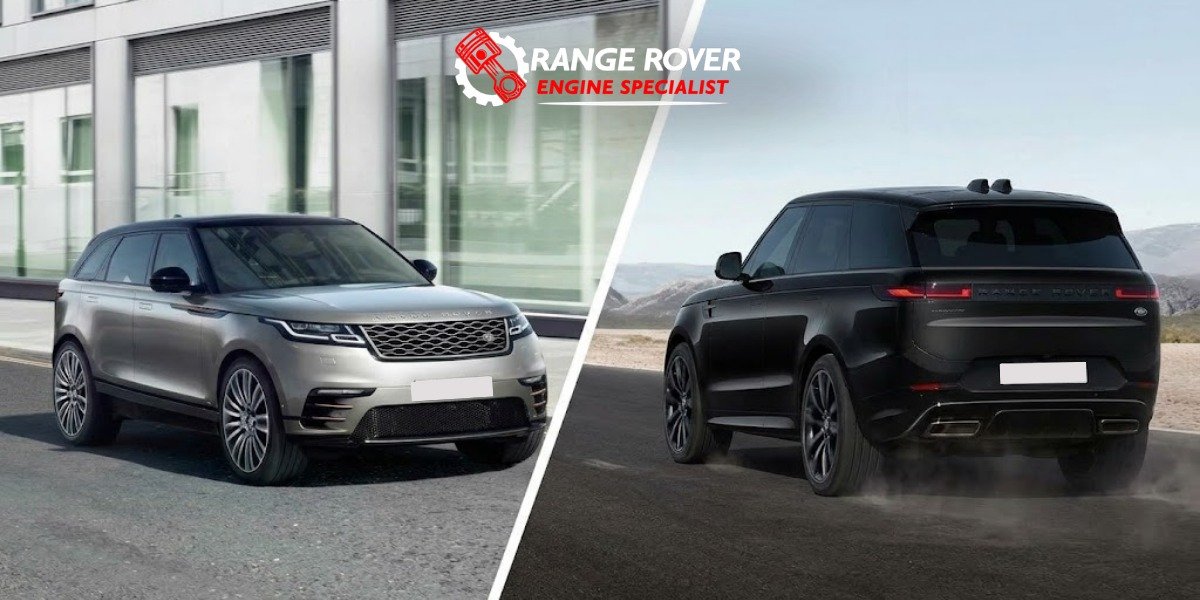
Comparing Range Rover Sport VS Velar engines reveals two ranges built around different priorities, with the Sport favouring stronger performance and towing capability, while the Velar leans toward efficient everyday power with a more compact footprint. Both share Jaguar Land Rover’s Ingenium engine family at their core, but each Range Rover Sport Engine and Range Rover Velar engine carries different output tunes and additional options unique to its model. At Range Rover Engine Specialist in Grays, UK, we supply and fit every Range Rover engine variant fitted to both models, and this guide compares them in detail, covering engine codes, specifications, and common faults, all backed by no upfront charges and no deposit required.
Range Rover Sport VS Velar Engines: The Overview
At the highest level, Range Rover Sport VS Velar engines differ mainly in scale and outright performance ceiling. The Sport offers the more powerful diesel six-cylinder and V8 options, plus a flagship supercharged V8 petrol not offered on the Velar. The Velar’s range tops out with a mild-hybrid six-cylinder petrol, focusing on efficiency and refinement rather than outright power. Both models share the same four-cylinder Ingenium diesel foundation, meaning many parts and much of the reliability profile overlap between the two ranges.
Range Rover Sport Engine Codes You Need to Know
The Range Rover Sport range spans the 3.0-litre TDV6 and SDV6 diesel, engine code 306DT, the 4.4-litre SDV8 diesel, engine code 368DT, and the 5.0-litre supercharged V8 petrol, engine code AJ133. Later models added the 3.0-litre mild-hybrid D300 Ingenium diesel, engine code 306DT, and the 3.0-litre mild-hybrid P400 Ingenium petrol, engine code 400PT. This broader range reflects the Sport’s positioning as the more performance-focused and capability-oriented model within the wider Range Rover lineup.
Range Rover Velar Engine Codes You Need to Know
The Velar range uses the 2.0-litre Ingenium diesel, engine code 204DTD, badged D180, D200, and D240, alongside the 2.0-litre Ingenium petrol, engine code 204PT, badged P250. Earlier models offered the 3.0-litre diesel V6, engine code 306DT, and the supercharged petrol V6, engine code AJ126, both discontinued as the range moved toward the newer mild-hybrid P400, engine code 400PT. The Velar’s range is generally more compact than the Sport’s, reflecting its positioning as a smaller, more design-focused model.
Diesel Options Compared
The Range Rover Sport’s diesel range tops out at the 4.4-litre SDV8, producing up to 339 bhp, well suited to serious towing and long-distance cruising. The Velar’s diesel range peaks with the 2.0-litre D240, producing around 240 bhp, considerably less powerful but sufficient for a lighter, more compact vehicle. Both models share the 204DTD and 306DT engine codes across their four- and six-cylinder diesel options, meaning many wearable parts and known faults are directly comparable between the two ranges.
Petrol Options Compared
The Range Rover Sport’s petrol flagship is the 5.0-litre supercharged AJ133, producing up to 575 bhp in SVR guise, an engine not offered anywhere in the Velar range. The Velar’s petrol ceiling is the mild-hybrid 400PT, producing around 400 bhp, a genuinely quick engine but well short of the Sport’s outright performance ceiling. For buyers wanting the strongest possible petrol performance, the Sport is the only option between the two models, while the Velar suits those prioritising efficiency alongside strong everyday performance.
Common Problems and Solutions Across Both Models
The shared 204DTD diesel found in both models can develop EGR valve clogging and turbo actuator wear, both addressed with correct replacement parts. The 306DT diesel, used in six-cylinder form on both the Sport and earlier Velar models, is known for timing chain wear. The Sport-exclusive AJ133 supercharged petrol can suffer from supercharger coupling wear. Addressing any of these faults early significantly reduces the risk of escalation into a full engine rebuild on either model.
Reconditioned Engines vs Used Engines for Either Model
Whichever model you drive, understanding reconditioned engines vs used engines matters once a fault has progressed too far for economical repair. A used engine removed from a donor vehicle carries the same wear history as that vehicle, a real concern regardless of whether it came from a Sport or Velar. A reconditioned engine is fully stripped, rebuilt with new bearings, seals, gaskets, and often a new timing chain, giving a genuinely fresh start. For most owners, the safer long-term choice is to buy a reconditioned unit rather than risk a used engine of uncertain remaining lifespan.
Our Supply and Fit Services at Range Rover Engine Specialist
Range Rover Engine Specialist provides complete supply and fit services for every engine fitted to both the Range Rover Sport and Velar, so you receive an accurate quote based on your exact engine code and model. Our process starts with a free diagnostic quote, followed by sourcing the correctly matched reconditioned JLR engine or verified used unit from our network. Our technicians carry out the fitting, including ancillary transfer, fluids, and a full road test. We operate with no upfront charges and no deposit required, so you know the cost before work begins.
Table of Range Rover Sport and Velar Engine Models in Detail
The table below gives a detailed breakdown across both models to help you shop for the correct Range Rover engine for sale and compare specifications side by side.
| Model | Output Badge | Engine Code | Fuel Type | Power Output | Torque | Common Fault | Recon Supply & Fit |
| Sport | 3.0 SDV6 | 306DT | Diesel | 258–306 bhp | 600–700 Nm | EGR valve clogging | £3,700–£5,600 |
| Sport | 4.4 SDV8 | 368DT | Diesel | 335–339 bhp | 740 Nm | Injector seal leaks | £4,200–£6,000 |
| Sport | 5.0 V8 Supercharged | AJ133 | Petrol | 503–575 bhp | 625–700 Nm | Supercharger coupling wear | £6,800–£9,900 |
| Sport | D300 Ingenium | 306DT | Diesel + 48V | 296–300 bhp | 650 Nm | Mild-hybrid battery checks | £4,300–£6,100 |
| Velar | D180/D200/D240 | 204DTD | Diesel | 178–240 bhp | 430–500 Nm | EGR valve clogging | £3,200–£5,100 |
| Velar | P250 | 204PT | Petrol | 247–250 bhp | 365 Nm | Timing chain tensioner wear | £3,600–£5,200 |
| Velar | P400 Ingenium | 400PT | Petrol + 48V | 400 bhp | 550 Nm | Coil pack, mild-hybrid checks | £5,600–£7,700 |
Figures are supply-and-fit estimates for a genuine, warrantied reconditioned unit and will vary based on ancillary condition, labour rates, and warranty length on the day.
Nationwide Logistics: Why Choose Range Rover Engine Specialist, Grays
Based in Grays, UK, Range Rover Engine Specialist runs a dedicated logistics operation to move any Range Rover Sport or Velar engine safely and quickly across the country. Every unit is securely palletised and tracked from our warehouse to your chosen garage or address, with most UK mainland deliveries arriving within one to three working days. We also offer engine collection for core exchange returns, reducing costs further for customers upgrading their unit. Local customers across Essex and London benefit from direct collection and delivery, keeping engine replacement costs in UK predictable across both models.
Frequently Asked Questions
1. What is the main difference between Range Rover Sport and Velar engines?
The Sport offers more powerful diesel and petrol options, including a supercharged V8 not available on the Velar.
2. Do the Sport and Velar share any engine codes?
Yes, both use the 204DTD diesel and 306DT engine codes across their four- and six-cylinder options.
3. Which model has the more powerful petrol engine?
The Range Rover Sport, with its supercharged 5.0-litre V8 reaching up to 575 bhp in SVR guise.
4. Do I need to pay a deposit for engine replacement?
No, Range Rover Engine Specialist operates with no upfront charges and no deposit required on any job.
5. Do you deliver Range Rover engines across the UK?
Yes, we deliver nationwide from our Grays base, with most orders arriving within one to three working days.
