
 By Colin Brown
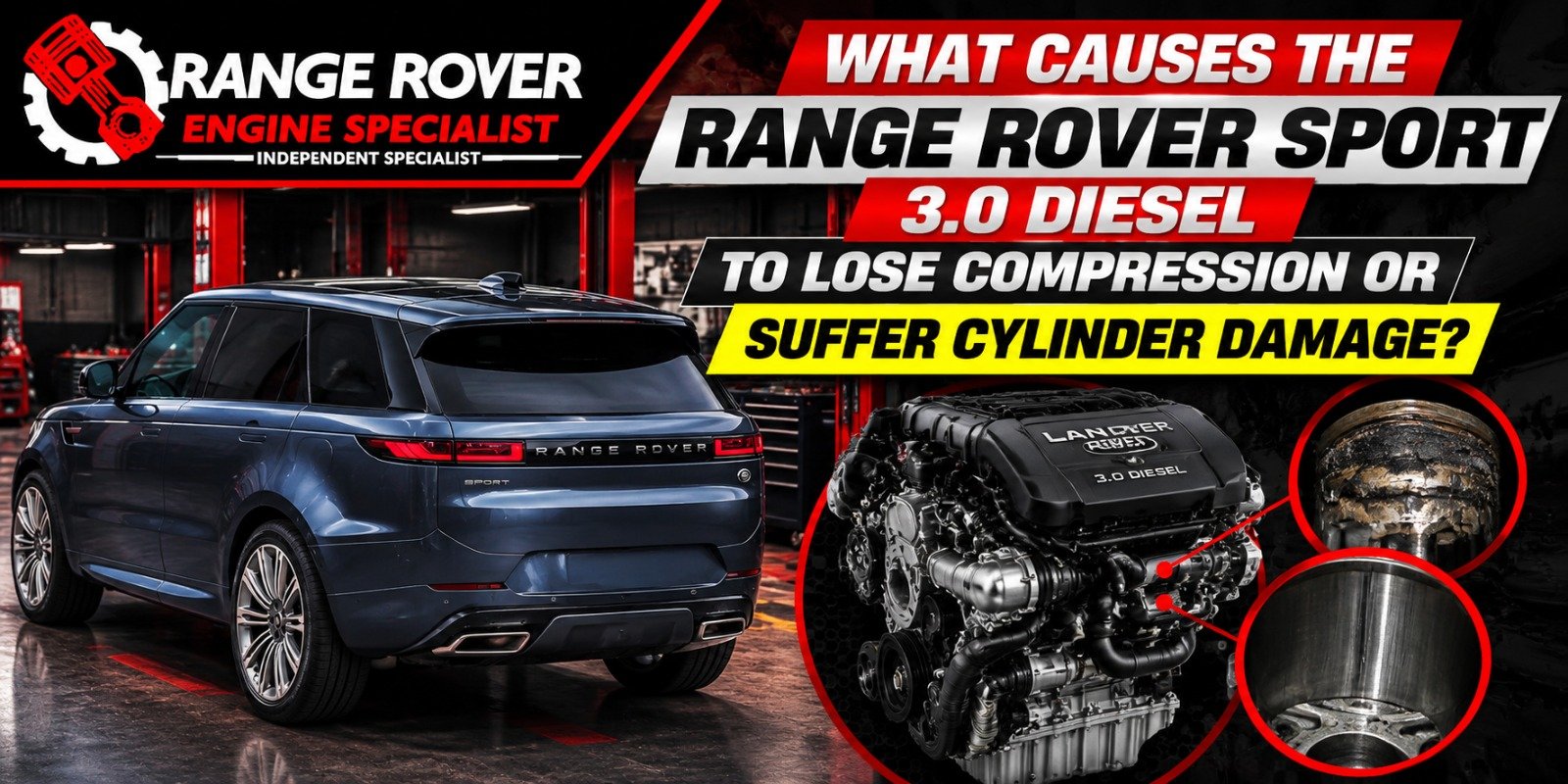
The Range Rover Sport 3.0 diesel is powerful, smooth and great for towing. However, compression loss and cylinder damage are serious problems that can affect this engine. If they’re left untreated, they can lead to a costly engine rebuild or a full engine replacement. At Range Rover Engine Specialist in Grays, UK, we diagnose and repair these faults every week. In this guide, we explain the warning signs, the main causes, engine codes, repair options and engine replacement costs in the UK.
Range Rover Sport 3.0 Diesel Engines and Engine Codes
The Range Rover Sport has used two main 3.0-litre diesel engine families. Older models used the V6 TDV6 and SDV6 (306DT). Newer models, from 2020 onwards, use the Ingenium inline six-cylinder MHEV engine (DT306).
| Engine | Model | Years | Engine Code | Size | Power | Torque |
| TDV6 | Sport L320 | 2009–2013 | 306DT | 3.0 L V6 | 211–245 PS | 520–600 Nm |
| SDV6 | Sport L320 | 2011–2013 | 306DT | 3.0 L V6 | 256 PS | 600 Nm |
| TDV6 | Sport L494 | 2013–2020 | 306DT | 3.0 L V6 | 258 PS | 600 Nm |
| SDV6 | Sport L494 | 2013–2020 | 306DT | 3.0 L V6 | 306 PS | 700 Nm |
| D250 / D300 MHEV | Sport L494 | 2020–2022 | DT306 | 3.0 L I6 | 249–300 PS | 570–650 Nm |
| D350 MHEV | Sport L494 | 2020–2022 | DT306 | 3.0 L I6 | 350 PS | 700 Nm |
| D250 / D300 / D350 MHEV | Sport L461 | 2022–present | DT306 | 3.0 L I6 | 249–350 PS | 600–700 Nm |
The 306DT V6 is by far the most common 3.0 diesel in UK Range Rover Sports. As a result, it’s also the engine we rebuild most often. You can find your engine code on the V5C or the engine block. Alternatively, send us your VIN, and our Range Rover Engine Works team will confirm it.
Range Rover Sport 3.0 Diesel Engine Specifications
Understanding how your engine is built helps explain why compression problems happen. Here are the key specs for both engine families.
3.0 TDV6 / SDV6 (306DT)
- Layout: 60° V6, DOHC, 24 valves
- Displacement: 2,993 cc
- Bore x stroke: 84.0 mm x 90.0 mm
- Compression ratio: 16.1:1
- Fuel system: 2,000-bar piezo common-rail injection
- Induction: Single turbo (TDV6) or parallel sequential twin turbos (SDV6)
- Block: Compacted graphite iron with aluminium heads
- Camshaft drive: Timing belts
3.0 Ingenium I6 MHEV (DT306)
- Layout: Inline six-cylinder, DOHC, 24 valves
- Displacement: 2,997 cc
- Bore x stroke: 83.0 mm x 92.3 mm
- Compression ratio: 15.5:1
- Induction: Twin turbochargers
- Hybrid system: 48V mild hybrid
- Block: Aluminium alloy
Diesel engines rely on very high compression to ignite fuel. Therefore, even a small loss of compression in one cylinder can cause hard starting, rough running and a loss of power.
Signs of Low Compression or Cylinder Damage
Spotting the warning signs early can stop a small problem from becoming a full engine replacement. Here are the most common symptoms:
- Hard starting: This is especially noticeable when the engine is cold.
- Rough idle or misfire: The engine shakes or runs unevenly.
- Loss of power: The engine feels weak, especially when towing or climbing hills.
- Smoke from the exhaust: Blue smoke means burning oil, while white smoke can mean coolant or unburnt fuel.
- Heavy blow-by: You may see fumes or pressure coming from the oil filler cap.
- High oil use: Topping up oil often can point to worn piston rings or bores.
- Knocking noises: These can mean bearing or piston damage.
- Engine warning light: This can come with misfire or fuel trim fault codes.
To confirm the problem, a specialist will carry out a compression test and a cylinder leak-down test. A borescope camera is also used to look inside the cylinders for scoring or damage. At our Range Rover garage in Grays, we use these tests to find the exact cause before recommending any repair.
Main Causes of Compression Loss in the 3.0 Diesel
Several faults can cause compression loss or cylinder damage in a Range Rover Sport 3.0 diesel. These are the most common ones.
1. Crankshaft and bearing failure. This is the best-known fault on the 306DT. Oil starvation wears the bearings, and a con rod can then fail. As a result, pistons, bores and the block can be seriously damaged.
2. Faulty injectors. A leaking or dribbling injector can wash oil off the cylinder walls. This causes bore scoring and ring wear. In severe cases, it can even burn a hole in a piston. Worn injector sealing washers can also let compression escape.
3. Piston ring and bore wear. High mileage, poor-quality oil and oil dilution all speed up wear. Carbon from the EGR system can also make the rings stick.
4. Oil dilution. Frequent DPF regenerations can push diesel into the oil. This thins the oil, so it protects the bores and bearings less.
These problems usually develop slowly, so regular servicing and early diagnosis make a big difference.
Other Causes and How to Prevent Them
Some causes of compression loss happen suddenly and can cause severe damage.
Overheating: A coolant leak or failed water pump can overheat the engine. This can warp the cylinder heads and blow the head gasket.
Timing belt failure: The 306DT uses timing belts. If a belt snaps or jumps, the valves can hit the pistons. This bends the valves and destroys compression.
Turbo failure: A failed turbo can send debris or oil into the intake. In some cases, this causes engine runaway and serious internal damage.
Hydrolock: Driving through deep water can draw water into the engine. Because water doesn’t compress, it can bend con rods instantly.
Fortunately, you can prevent most of these problems:
- Change the oil every 8,000 to 10,000 miles using the correct JLR-approved oil.
- Replace the timing belts at the recommended interval.
- Check coolant levels regularly and fix leaks straight away.
- Take regular motorway runs so the DPF can regenerate fully.
- Respect the vehicle’s wading depth and drive slowly through water.
- Have a Range Rover specialist check the injectors if you notice rough running.
Engine Rebuild, Replacement and Supply and Fit Services
The right repair depends on how much damage there is. If only one injector or a head gasket has failed, a targeted repair may be enough. However, if the bores, pistons or crankshaft are damaged, you’ll need an engine rebuild or a full engine replacement.
Here’s a guide to engine replacement costs in the UK:
- Compression and leak-down test: around £100 to £250
- Injector replacement: around £400 to £1,200
- Head gasket repair (V6): around £2,000 to £3,500
- Engine rebuild: around £4,000 to £7,000
- Reconditioned 306DT, supplied and fitted: around £4,500 to £7,000
- Reconditioned DT306 MHEV, supplied and fitted: around £6,500 to £9,500
Our supply and fit services include sourcing the correct engine, fitting it, coding it and road-testing the car. Most importantly, we offer No Upfront Charges and No Deposit Required, so you only pay once the job is complete.
Every engine also comes with a warranty. If you want to buy a reconditioned Range Rover engine with expert fitting, contact our Range Rover garage in Grays today for a free quote.
Reconditioned Engines vs Used Engines
When comparing reconditioned engines vs used engines, compression is one of the biggest concerns. A used engine comes from a donor vehicle with an unknown history. It may already have worn rings, scored bores or weak bearings. As a result, you could face the same compression problems again soon after fitting.
Reconditioned engines, on the other hand, are fully stripped, cleaned and inspected. We measure the bores and hone or re-bore them where needed. Next, we fit new piston rings, bearings, seals and gaskets. We also check and machine the crankshaft and cylinder heads, and we fit new timing belts. Finally, every engine is compression-tested before it leaves our workshop.
That means the known weak points of the 3.0 diesel are fixed properly before the engine reaches you. A reconditioned JLR engine also comes with a warranty, which most used engines don’t offer.
Although a used engine may seem cheaper, it can cost much more if it fails again. That’s why most of our customers choose to shop for reconditioned Range Rover engines for sale rather than used units.
UK-Wide Logistics and Delivery From Grays
Range Rover Engine Specialist is based in Grays, Essex, but we serve customers all over the UK. Our logistics service makes engine replacement easy, wherever you are.
If your Range Rover Sport can’t be driven, we can arrange vehicle recovery to our workshop from England, Scotland and Wales. Once the work is complete, we can return the vehicle to your home or business. Alternatively, if you prefer to use your local garage, we can deliver the engine straight to them.
Every engine is secured to a pallet, sealed against dirt and moisture, and shipped with a trusted courier. In addition, you get tracking updates from dispatch to delivery, so you always know when it will arrive.
Our Grays location is close to the M25, A13 and Port of Tilbury. As a result, we can deliver quickly to London, Essex, Kent and the rest of the country. Next-day delivery is also available on most stock engines. Simply put, you can shop with us online or by phone, and we’ll handle the rest.
Frequently Asked Questions
1. What causes low compression in a Range Rover Sport 3.0 diesel?
The most common causes are worn piston rings, faulty injectors, bearing failure and head gasket damage. Timing belt failure and hydrolock can also cause sudden compression loss.
2. How do I know if my engine has lost compression?
Common signs include hard starting, rough idle, loss of power and blow-by from the oil filler. A compression test will confirm the problem.
3. Can a cylinder with low compression be repaired?
Yes, depending on the damage. A head gasket or injector repair may fix it, but scored bores or damaged pistons usually need an engine rebuild or replacement.
4. Do I need to pay a deposit?
No. We offer No Upfront Charges and No Deposit Required, and you only pay once the job is complete.
5. Do you deliver engines and collect vehicles across the UK?
Yes. We offer tracked nationwide engine delivery and vehicle recovery from our base in Grays, Essex.
